When Is It Normal and When Should You Consult a Doctor?
Is your 2-year-old child not talking yet? Discover the core developmental signs of speech delay in toddlers, potential medical causes, and pediatric-backed ways to stimulate speech at home.
"His cousin talks seamlessly and they're the exact same age!" "My daughter understands everything perfectly, but she only speaks in an incomprehensible, jumbled language..." The phantom of speech and language delay is a prime driver of maternal stress and constant anxiety. Continuous comparisons between toddlers during family gatherings intensify the psychological burden on a mother, leaving her torn between traditional advice like "leave him be, he will talk on his own tomorrow" and alarming warnings across social media.
A child’s linguistic progress serves as a direct mirror of their cognitive and social development. In this comprehensive guide from our [Child Development] hub, we break down the medical milestones for speech at 24 months based on World Health Organization (WHO) protocols, mapping out when a delay is merely a temporary phase and when it requires immediate professional intervention.
The Medical Metric: What Should a 2-Year-Old Say?
Pediatricians and speech-language pathologists expect a child reaching their second birthday (24 months) to meet these core benchmarks:
- Baseline Vocabulary: Speaks at least 50 distinct, isolated words clearly (such as names of family members, familiar toys, or routine foods).
- Two-Word Phrases: The ability to link two words together to express a functional demand (e.g., "want milk," "bye-bye daddy," "more water").
- Understanding Simple Directives: Grasps simple, two-step verbal instructions without needing physical gestures (e.g., "Pick up the ball and give it to daddy").
- Imitating Words: Spontaneously attempts to repeat sounds or words spoken by parents during casual daily interaction.
Root Causes Behind Speech Delays in Toddlers
If your toddler isn't hitting the baseline metrics mentioned above, the delay could stem from one of the following environmental or physical variables:
1. Excessive Digital Screen Exposure (The Ultimate Barrier)
Allowing a toddler to sit in front of TVs, smartphones, or tablets for prolonged durations—even if they are watching dedicated educational baby channels—is a strict one-way communication loop. The child only absorbs data and never transmits, causing functional lethargy in the brain's linguistic centers and sharply stunting verbal and social skills.
2. Lack of Active Engagement & Quality Time
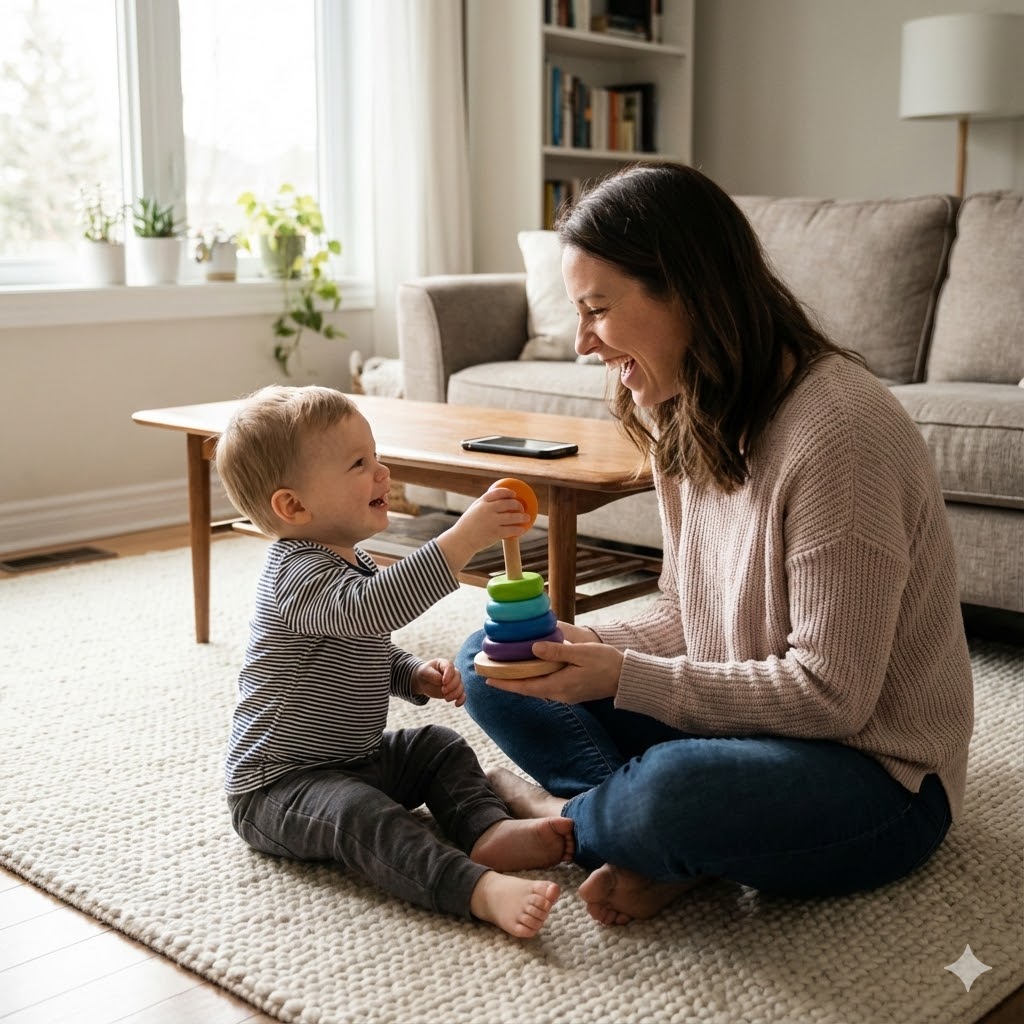
Children learn to verbalize through active listening and active imitation. If parents are entirely occupied throughout the day, or if the household immediately satisfies a toddler's needs based on mere "pointing" without encouraging them to try vocalizing the word, the child lacks a natural evolutionary motive to speak.
3. Underlying Medical and Organic Factors (Require Examination)
- Auditory Disturbances: Fluid accumulation behind the eardrum resulting from recurrent colds can muffle incoming sound waves, preventing the toddler from properly mimicking words.
- Tongue-Tie (Ankyloglossia): A restriction of the membrane beneath the tongue can impede the free articulation of certain phonetic sounds, though it rarely freezes speech completely.
4 Golden Steps to Encourage Speech Stimulation at Home
Re-engineering your child's immediate daily environment accounts for roughly 70% of resolving non-medical, temporary speech delays:
- Implement a Zero-Screen Rule: Eliminate televisions, smartphones, and tablets entirely for any child navigating a speech delay. Swap digital exposure for responsive, human-driven interaction and active play.
- Speak Slowly, Clearly, and Graphically: Narrate your daily actions to your child using a "sports commentator" style (e.g., "Mommy is cutting the crisp green cucumber to make a delicious salad!"). Keep your sentences brief, simple, and clean.
- Gently Boycott Pointing and Grunting: When your child points at a water bottle and whines, do not hand it over immediately. Drop down to their physical eye level and say: "Do you want water? Say water." Give them a few seconds to attempt a vocalization before handing them the bottle.
- Interactive Daily Reading Sessions: Browse through books displaying large, vivid, and colorful illustrations together. Point directly to a picture and say: "Look, a cat! The cat says meow... Where is the cat?" and encourage them to point to it or echo the sound.
Critical Red Flags: When to Seek Immediate Speech Evaluation
Do not adopt a "wait and see" approach if you observe any of these clinical warning markers at two years old:
- The child fails to respond when their name is spoken out loud (points toward potential hearing issues or broader neurodevelopmental domains).
- A complete absence of consistent eye contact; the child avoids looking into your eyes during close face-to-face interactions.
- Inability to imitate simple human vocalizations or utilize basic communicative gestures (such as waving "bye-bye").
🚨 Skills Development & Speech Consultation: If your child has completed two full years and only utters a handful of words, or struggles deeply with basic cognitive comprehension and you seek an objective, medical evaluation to act before it's too late; you can now Book a Customized Consultation with a Behavior Modification and Skills Development Expert through our platform to receive an actionable, clinical home speech plan under absolute privacy.
🔗 Essential Links for Your Development Journey:
- For smart indoor games that boost your two-year-old’s visual logic from the kitchen, see: activities to develop intelligence at two years old.
- To turn physical hyperactivity or tantrums into peaceful, channeled movement, browse: [indoor games to release a child's energy].
- To return to the main master dashboard for childhood genius and cognitive milestones, visit: Child Intelligence.


.png)

.png)
.png)
.png)
.png)
.png)
.png)